By Pastor (Dr) Yinka Oduwole
Europe stands at a fascinating and challenging crossroads. Across our continent, churches are ministering in increasingly diverse, secular, mobile, and digitally connected societies. Many congregations are asking profound questions about discipleship, leadership, mission, church growth, and long-term sustainability.
Against this backdrop, church leaders and ministry practitioners from across Europe gathered for the FREGH Continental Summit 2026 under the theme “Building Healthy Churches.” While the contexts represented were diverse, a common conviction emerged: the future strength of the Church in Europe will depend not merely on numerical growth, but on the cultivation of healthy churches that faithfully reflect the life and mission of Jesus Christ.
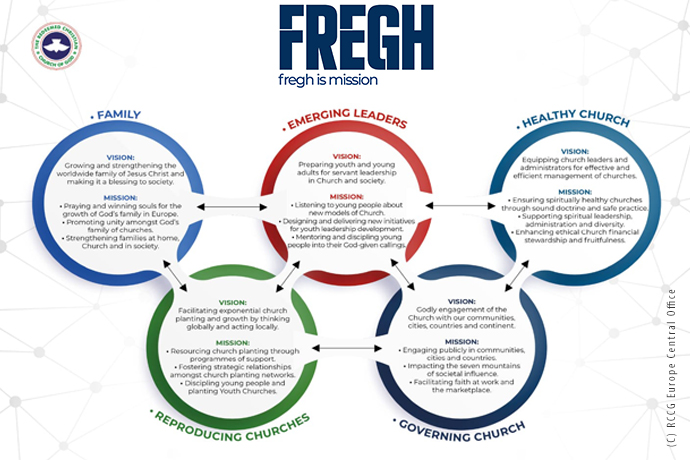
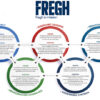
The summit was built around the FREGH framework, which explores church health through five interconnected dimensions: Family, Reproducing Churches, Emerging Leaders, Governing Church, and Healthy Church. Together, these dimensions encourage a holistic approach to ministry – one that seeks not only to grow churches, but to strengthen people, develop leaders, support families, engage society, and advance the Gospel.
Hosted by the Continental Overseer of Redeemed Christian Church of God (RCCG) in Europe, Pastor Leke Sanusi, one of the most significant observations from the summit was that church health is multidimensional. Healthy churches are not defined solely by attendance figures, financial resources, or organisational activity. Rather, they are communities where biblical discipleship flourishes, where people are growing in Christ, leaders are developed intentionally, governance is exercised with integrity, and mission remains central.
Throughout the discussions, participants repeatedly returned to the example of the New Testament Church. The remarkable growth recorded in the Book of Acts was rooted in spiritual vitality, prayer, sound doctrine, authentic fellowship, courageous witness, and dependence upon the Holy Spirit. These foundational principles remain just as relevant for Europe today as they were in the first century.
Particular attention was given to leadership development. Many churches across Europe are facing questions of succession, generational transition, and volunteer sustainability. The summit highlighted the importance of identifying, mentoring, and releasing emerging leaders who can serve effectively in increasingly complex ministry environments. Healthy churches understand that leadership development is not an optional activity but a strategic responsibility.
The role of families also featured prominently in the conversations. In a season when family structures are under considerable pressure across many societies, churches have a unique opportunity to strengthen marriages, support parents, nurture children and young people, and provide communities of belonging and care. Healthy families contribute significantly to healthy churches.
Another key theme was church reproduction. Healthy churches naturally seek to make disciples, reach new communities, and establish new expressions of Christian witness. Reproduction is not simply about expansion; it is about participating in God’s mission. Churches that remain outward-looking often discover renewed vitality and purpose.
The summit also explored the Church’s contribution to public life. Across Europe, churches continue to serve communities through compassion, advocacy, education, social action, and practical support. Participants reflected on how Christian leaders can contribute constructively to public conversations while demonstrating humility, integrity, and servant-hearted leadership.
Perhaps most encouraging was the spirit of unity evident throughout the gathering. Participants represented different nations, cultures, experiences, and ministry settings, yet shared a common desire to see Christ honoured and the Church strengthened. In an era often marked by division and polarisation, such collaboration offers a hopeful sign for the future.
The challenges facing the Church in Europe are real. Yet the opportunities are equally significant. God continues to call His people to faithful witness across our continent. Building healthy churches remains one of the most important investments we can make in the future of Christian mission in Europe.
The FREGH Continental Summit 2026 served as a reminder that healthy churches do not happen by accident. They are built intentionally through discipleship, leadership development, strong families, effective governance, mission engagement, and above all, dependence upon the Holy Spirit.
As we continue to serve across Europe, may we commit ourselves afresh to building churches that are spiritually vibrant, biblically grounded, missionally focused, and equipped to impact future generations for Christ.
“Now to him who is able to do immeasurably more than all we ask or imagine, according to his power that is at work within us, to him be glory in the church and in Christ Jesus throughout all generations, for ever and ever! Amen.” (Ephesians 3:20–21)
(Dr Yinka Oduwole is Continental Director of Strategy and Mission for RCCG Europe Continent 9 (United Kingdom, Europe Mainland and the Republic of Ireland). He coordinates the FREGH initiative – Family, Reproducing Churches, Emerging Leaders, Governing Church and Healthy Church – which promotes holistic church health, leadership development, mission effectiveness, and societal transformation across Europe.)