Back to our roots 

Back to our roots 
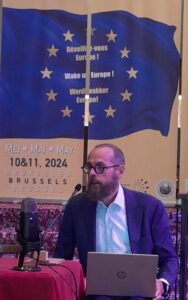
On May 10 and 11, the annual State of Europe Forum landed in Brussels. In lectures and workshops, participants reflected on the past, the present, and the future of the European Union. The Christian faith played an important role in the past, but what about the future? 
Do you happen to know when the European Union observes Europe Day? Most likely not. But this day, May 9, marks the beginning of what now is a European Union of 27 member states. It started with a dream of a ‘community of peoples’ deeply rooted in Christian values. Were you aware of this pious motivation for the European peace project? 
On May 9, 1950, the French Minister of Foreign Affairs, Robert Schuman, delivered a three-minutes’ speech that would reconcile Germany and France, establishing a community of coal and steel. Bringing these two resources under international control would avoid a new build-up of military power and a new war. This initiative was deeply rooted in the Christian belief of the French Robert Schuman, the German Konrad Adenauer, and the Italian Alcide De Gasperi. For these founders of the European Union, it was obvious that this community of peoples should be deeply rooted in Christian values. What happens to the European project when we cut it from its roots?
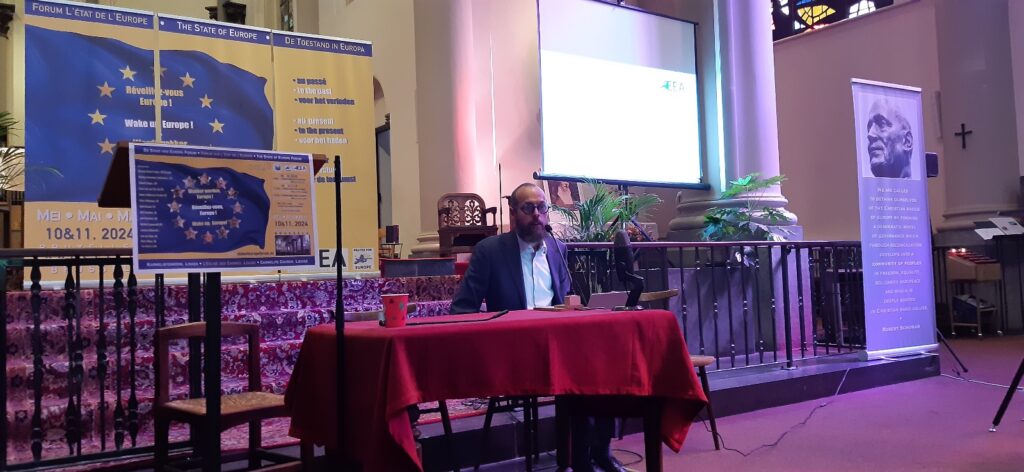
 
Since 2011, the Schuman Centre for European Studies organises a State of Europe Forum to reflect on the Christian roots of Europe. The forum is organised in the capital of the country holding the EU presidency during the first six months of the year. That’s why in 2024, the Forum was held in Brussels. 
On the opening evening, Jeff Fountain (the director of the Schuman Centre) and Professor Evert van de Poll led us in reflecting on the Christian roots of the European Union. Nowadays, people prefer to speak about European values rather than Christian values. Prof Van de Poll identified some of these European values, like human dignity, democracy, solidarity, and responsibility, tracing them back to their Christian origin. 
The next day started with seminars on antisemitism and the role of Christians in European politics. In the plenary morning session, bishop Radoslaw Zmitrowicz from Ukraine delivered a moving and powerful message. Against the background of the war, he spoke about brotherhood and forgiveness. He even referred to forgiveness as the key to victory. But the bishop stressed that we’ll never get there without a Saviour. As Christians, we are called to be a counterculture and to provide a safe place where people can learn brotherhood, breaking down walls. 
Seminars in the afternoon built on the morning lectures, focusing on peace, reconciliation, health, and migration. 
The State of Europe Forum concluded with a session on the European elections and how to pray for the future of our Union. I had the opportunity to present the EEA election resources and share some specific prayer points with the audience. These fed into a powerful time of prayer led by the EEA prayer network. 

Especially in the midst of current practical and spiritual sorrows about our continent, I found it really helpful to go back to the founders of the European Union. As Christians, we should regard it our responsibility to keep their dream of a ‘community of peoples’ deeply rooted in Christian values alive. As Bishop Zmitrowicz emphasised: “Christ has not changed.” In Him, everything is possible, even a European Union turning back to its roots. 
Arie de Pater, EEA Brussels Representative 

Latest Posts

Receive the EEA newsletter!