Europe stands at a decisive crossroads.
We have reached what Os Guinness describes as a ‘civilisational moment’ in history. That is, a watershed turning point in the history of a civilisation, where it faces a fundamental crisis regarding its core identity, values, and future direction. When a civilisation has lost touch with the original, dynamic ideals that created it, the choice remains between renewal, replacement or decline.
Secularism has effectively sidelined religion in today’s society. Post-modernity has banned meta-narratives and ‘truth’ from public dialogue. Europeans have thus been robbed of a moral compass and meaning of life. The prophetic voice of the Church has too often been cowed into apologetic silence.
Yet in the aftermath of World War Two, Christian values of human dignity, forgiveness and reconciliation, and the sharing of responsibility fed the post-war consensus that shaped the European project. The United Nations, Universal Declaration of Human Rights, the European Union and other international institutions were moral responses to catastrophe, shaped by Christian, Jewish, and humanist convictions about human dignity, reconciliation, and the rule of law.
Yet today the conviction of ‘never again’ is under strain through loss of memory. The generation that experienced the devastation of the Second World War is passing away. As this memory fades, so too does the commitment to the values that sustained these institutions. The challenges Europe and the European Union face are not merely political or economic; they are moral and spiritual. The question is not only what Europe will do, but who Europe will be.
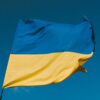
One of the most visible tests of Europe’s values is Ukraine. Russia’s full-scale invasion is a direct challenge to the principles on which the post-1945 European order was built: the sanctity of borders, the dignity of nations large and small, and the rejection of imperial conquest. Europe has rightly spoken the language of solidarity, sovereignty, and justice – rooted in biblical values. Yet Ukraine exposes the gap between declared values and costly obedience. Will we Europeans defend freedom when it demands sacrifice, endurance and moral clarity? Or will fatigue, fear and transactional politics erode our resolve?
Europe’s challenges are compounded by external pressures. Russia represents a direct threat through military aggression, disinformation and the instrumentalisation of energy and fear. Unprecedented pressures are also now coming from the current United States administration, including declared support of right-extreme European parties, nationalism, transactional alliances, indifference to international law – and turning a blind eye to Putin’s daily war crimes.
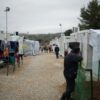
Europe also faces deep internal challenges. The treatment of the sojourner—the migrant, refugee, and asylum seeker—has become a moral fault line. Scripture repeatedly grounds justice in the memory of vulnerability: “You shall love the stranger, for you were strangers in the land of Egypt” (Deut. 10:19). Europe, shaped by centuries of migration, exile, and displacement, risks forgetting this biblical and historical truth. When fear hardens into exclusion and dehumanisation – often in the name of protecting Judeo-Christian values!! – Europeans betray both their Christian heritage and their human-rights vocation.
The vulnerable within Europe also test its soul: the poor, the elderly, the unborn, and those rendered invisible by economic systems that prioritise growth over dignity. Biblical values insist that societies are judged by how they treat “the least of these” (Matt. 25).
This erosion of our moral foundations is a challenge to the Christian community in Europe, inside and outside the EU. Will we as God’s people in Europe recover a prophetic voice? Not a voice of cultural dominance but of truth, repentance and hope. The prophets called their societies back to covenant faithfulness, reminding them of their origins and their calling.
While shaped by various traditions, Europe’s roots were primarily formed by biblical visions of the person as made in God’s image, of power restrained by law, and of peace built through justice and reconciliation. Our vocation is to retell the vision of flourishing life flowing from the story that was by far the single biggest factor in making Europe Europe: the story of Jesus of Nazareth.
by Jeff Fountain, Director of the Schuman Centre for European Studies