Welcoming the Stranger in Turbulent Times: Whitney Gerdes on Trauma, Terror, and the Great Commission at Europe’s Doorstep

  • In NEWS
  • December 11, 2025
Welcoming the Stranger in Turbulent Times: Whitney Gerdes on Trauma, Terror, and the Great Commission at Europe’s Doorstep
Immigration is a worrying topic. The numbers, the expense, the impact on local communities all provoke alarm. Political rhetoric is fierce. Politicians scramble to placate the electorate.
At the same time, in the United Kingdom, half the churches and Christian projects caring for refugees and migrants have apparently either closed or gone quiet because of direct intimidation from the Far Right. While it is good and important to ask big questions about immigration, it seems there is something else to worry about.
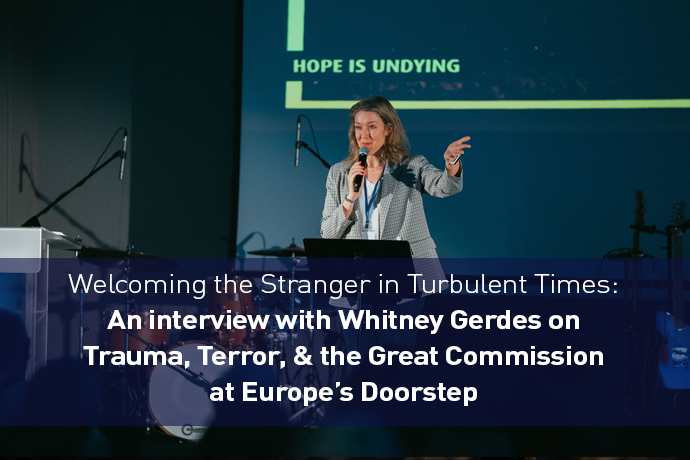
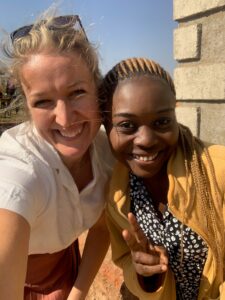
The Refugee Highway Partnership’s European network is part of the EEA family.  RHP partners are Christian projects across Europe who offer Jesus’ love to refugees and migrants. We decided to ask their managing director, Whitney Gerdes, some big questions about their work in the light of socio-political realities. Whitney lives in Vienna, directs RHP Europe and is a specialist in refugee children’s education and trauma care.


Before we get political, you’re a specialist in trauma care for refugee children? Is this really needed in Europe?
Yes. In every European nation, there are refugee families and unaccompanied children who are processing trauma. They carry their story of war or persecution back home and/or the trauma of the journey. Damage builds up through the constant fear, the impact of abuse or trafficking, and the confusion and helplessness of being stuck in the asylum system for years.
Do RHP partners care for illegal migrants, as well as those deserving of refugee status? If so, why?
Yes, we serve illegal migrants. The Good Samaritan inspires us. Jesus asks His followers to care for the one in need, no matter who they are. RHP does not take any political stance. We respect the law. However, every human being bears God’s image. He loves them. We are to love them.
Let me just say that asylum seekers do not set out on their journey to arrive illegally. Legal routes are often too slow or simply impossible. When you need to escape danger, you may need to get out fast. When home is too risky, you would rather live precariously in Europe.
But if an illegal migrant asked an RHP project to assist them in illegality e.g. in sneaking over a border, would they help?
While every RHP project is independent, I am confident that they follow good Christian practice. We are called to honour the law. We are not revolutionaries. Our task is to support someone in safe, legal asylum or migration solutions. If we see that they have a low chance of being legally able to settle in Europe we prayerfully seek to support them in coming to terms with that. From a basis of relationship, conversations can be had to help them prepare to return home.
What would you say to those who do not like the change migrants are causing in their nation?
It is completely natural to question the impact of people of other cultures settling in your town. However, we are invited to see God of all creation in the richness of different peoples. Neighbourhoods are always changing, whether new residents are from 10 or 10000 miles away. If we feel anxious, so do the migrants and refugees. The Lord invites us to welcome them. By doing His will, we can feel confident.
If public services are struggling, we should not blame migrants.  Foreigners are such an easy scapegoat, used by politicians to cover up poor public investment.  Let’s hold governments accountable for all their policies, not just migration policy.
But there are dangerous people, even terrorists coming to Europe. In the UK recently, a Syrian born migrant tried to blow up a synagogue. Three people were killed.
You are right. There have been a few terrorist attacks. Each is a tragedy. However, I would stress that there are bad actors in every group of people.  I also wonder, if we could turn the clock back, if the perpetrators had found friendship and community, might they have been immune to those who radicalised them? They alone are responsible for their horrific actions. However, studies show that isolation breeds radicalisation. Welcoming and seeking to integrate migrants is the best way to strengthen safety. Our anger against the few should not determine how we react to all.
I know some are concerned at the number of Muslims settling in Europe. However, I would say that the Church should not think or act small. We have a huge Gospel opportunity. Let’s not be afraid. There may be big cultural differences, but most Muslims want to live in peace. The Lord is doing a new thing. He invites us to engage in His Great Commission.
What impact are angry political voices having?
Alarm is huge. Legally settled migrants and refugees fear their status may be removed. Those still being processed wait longer. Even the legal appeal process is sometimes ignored due to political pressure. Support projects are being closed. Some border guards are more violent. Racism is clearly rising fast. There seems to be a general permission to be hateful.
As for the impact on Christian ministries, both public and Christian financial support is declining. It is harder to fundraise for fear of attracting unwelcome attention.
But surely it is still OK to be worried about immigration
Yes. It is normal that we want to protect what we value. At the same time, followers of Jesus owe their first allegiance to the Kingdom of God.  We can view immigration as intrusion and disruption, or we can see it as the Great Commission becoming easier. So, let’s ask God for wisdom to see the Gospel opportunities. The nations have come to our doorstep. Let’s work together to share Jesus with them. If an individual is required to leave, let’s send them back with love and carrying Jesus, or at least the seeds of the Gospel, within them.
No more questions. What would you like to share?
Here’s just one story: An Iranian in Vienna told me “I think I understand why God brought me here.” This young man had become a Christian because believers welcomed and helped him and he wanted to know why. He noticed how Austrians did not seem very happy, so he tried to smile at them and share joy. The reaction was not good! So, he decided to seek ways to practically help individuals and then tell them about Jesus.
One day, he and a friend spotted an old lady struggling with her shopping bags. They gently approached her but kept a distance, saying “We would love to help you. We don’t want any money. We are Christians.  Can we carry your bags home for you?”
The lady was distinctly nervous but accepted the help. As they climbed the stairs to her apartment, a neighbour opened her door to check all was well. The lady said, “So it turns out not all of them are bad”. Before the Iranians left, they were able to share that Jesus loved this lady and told her that she would be so welcome to come to church.”
If readers would like to find out more about refugees and how Christians reach out to them, they are warmly invited to join us at the RHP Europe Roundtable 23-27 March https://rhpeurope.net/.
Article and interview by Julia Doxat-Purser, EEA’s Socio-political Representative & Religious Liberty Coordinator

Latest Posts

Receive the EEA newsletter!