Connect, equip & represent
Blog Template
- Home
- Blog Template

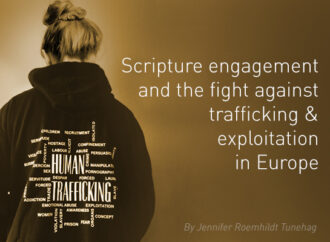
Scripture engagement and the fight against trafficking and exploitation in Europe0
- Bible Engagement, NEWS
- May 12, 2021
People who have been exploited often have a complicated relationship with God. If God is powerful, why didn’t He prevent my abuse? Where was God when all of these bad things were happening? There are vulnerable questions, too: how do I talk to God about rape? Does God condemn me for what I have done?
READ MOREReading God’s Word Together0
- Bible Engagement, NEWS
- May 12, 2021
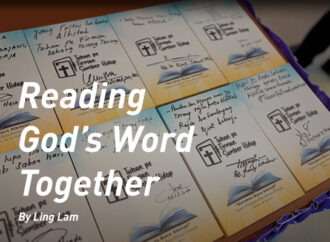
By Ling Lam, Wycliffe Global Alliance Asia-Pacific Area What do you do when you finally have God’s Word in your own language? You read it. Not enough? What
READ MOREJoin in for World Refugee Sunday 20210
- NEWS
- May 12, 2021
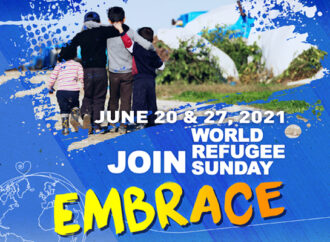
For the first time in history, the number of people fleeing persecution, conflict and violence has reached 80 million. Many of them are being excluded and refused a welcome in their new environments. Refugee Highway Partnership in cooperation with the World Evangelical Alliance call Christians around the globe to stand by all these people on the run by jointly commemorating World Refugee Sunday on 20 or 27 June 2021.
READ MORE
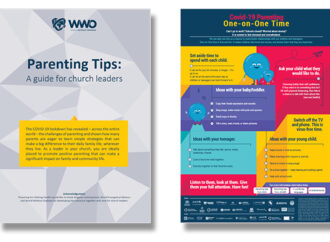
Covid-19 parenting tips: A guide for church leaders0
- Bible Engagement, NEWS
- May 12, 2021
The Bible has much to say about family life and parenting – it’s very real about the challenges, and as a parent myself, I’m quite encouraged that the heroes of faith often struggled to parent well. In my role with World Without Orphans, I’ve seen that in some churches, in some cultures providing parents with advice and support is commonplace, while in others, it’s a subject that church leaders wouldn’t dare go near! For many, COVID-19 has changed that, and it’s also provided yet more evidence to global agencies and NGOs just how essential it is to engage with church leaders.
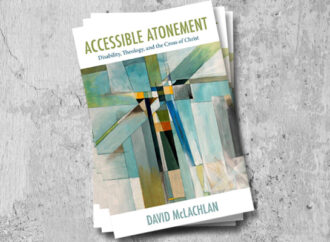
READ MOREBook Recommendation: Accessible Atonement – Disability, Theology, and the Cross of Christ0
- NEWS
- May 12, 2021
The atonement—where God in Jesus Christ addresses sin and the whole of the human predicament—lies at the heart of the Christian faith and life. Its saving power is for all people, and yet a deep hesitancy has prevented meaningful discussion of the cross’ relevance for people with disabilities. Speaking of disability and the multifaceted concept of the atonement has created an unresolvable tension, not least because sin and disability often seem to be associated within the biblical text.
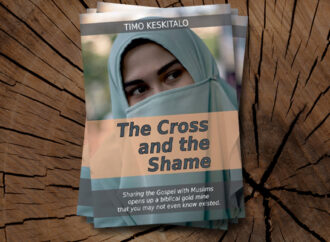
READ MOREBook Description: The Cross and the Shame0
- NEWS
- May 12, 2021
By Timo Keskitalo Descriptions of different cultures and their emphases may be dangerous, and an individual may even feel them to be offensive. On the other hand, generalisations of
READ MORE

Good News among the Roma “Christ welcomes and raises us all”
- NEWS
- December 4, 2024
Global Charter Press Release
- NEWS
- June 12, 2012
Thank you Hester!
- NEWS
- December 12, 2018
European Refugee Crisis Response: News from Greece
- NEWSLETTERS
- November 19, 2015
EEA Newsletter December 2016
- NEWSLETTERS
- December 16, 2016
Daily Devotional: Thursday, 12 January 2017
- WEEK OF PRAYER
- January 12, 2017
The Solas and Freedom of Conscience
- NEWS, WEEK OF PRAYER
- January 3, 2017

Latest Posts
-

Newsletter | Welcome to June!
- NEWS, NEWSLETTERS
- June 3, 2026
-
-
-
-


Top Authors
-
Marco Zoutman
ADMINISTRATOR
-
Matthias Böhning
ADMINISTRATOR


Latest Posts
-
Newsletter | Welcome to June!
- NEWS, NEWSLETTERS
- June 3, 2026
-
-
-
-
European Evangelical Alliance
The Evangelical Alliance was originally created in London in 1846. A number of founding members were representing European countries. The European Evangelical Alliance (EEA) was founded in 1951. The EEA exists to foster unity and evangelical identity and provide a voice and platform to 23 million European evangelical Christians. The mission of the EEA is to CONNECT for com-mon purpose, EQUIP for integral mission and REPRESENT with a united voice. It is a grassroots movement from all Protestant traditions present in 36 European countries. The Brussels office of the EEA promotes active citizenship of its constituency and represents it to the European Institutions. The EEA is part of the World Evangelical Alliance (www.worldea.org)
Get In Touch With Us
Legal Seat:
Josefstr. 32
8005 Zürich
Switzerland
Brussels Representation:
Rue Belliard 205/14
1040 Brussels
Belgium
Office Representation and Postal Address:
Reuterstr. 116
53129 Bonn
Germany
2024 © Copyright Europeanea.org | design by MarcoZoutmanDesign