
Connect, equip & represent
NEWS
- Home
- NEWS

Book recommendation0
- NEWS
- October 30, 2020
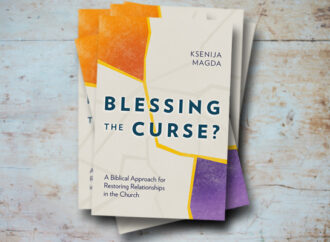
In her book Ksenija Magda gives a study what the Bible says concerning this “curse” and how different theologians come to different conclusions. Showing what the fall did to humanity, she challenges some convictions, which have been passed on – and still are – in many churches.
READ MOREMigration and Asylum0
On 23 September, the European Commission released a draft Migration and Asylum Pact. This Pact is intended to have some bits and pieces for every member state as a starting point for negotiations. Can you use this as a starting point for engaging your own government to make sure the compromise has the individual at the centre, rather than mere statistics?
READ MOREBeing Church Amid Absolute Hopelessness in Lebanon0
- NEWS
- September 9, 2020
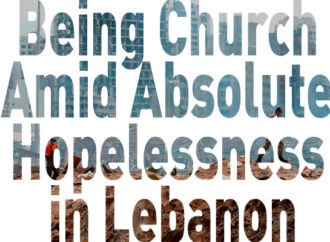
In recent years, as the economic and financial situation was worsening, I repeatedly heard Lebanese from my parents’ generation saying that “even during the civil war [1975-1990], we were better off.”
READ MORE

Biblical heritage is still common sense, we just don´t notice it anymore0
- Bible-Europe, NEWS
- September 9, 2020
The overarching communication theme for the European Evangelical Alliance in the second half of the year 2020 is “The Relevance of the Bible in European Societies”. Readers of the EEA Newsletter are being presented with different perspectives on this topic over the course of several EEA newsletter editions. We were delighted by the opportunity to conduct an interview with Léa Köves, speaker and employee of the Ravi Zacharias International Ministries (RZIM) in France.
READ MOREScience & Technology0
- Bible-Europe, NEWS
- September 9, 2020
The Bible, with its myths, miracles and fanciful descriptions of angels and demons, has been a major barrier to the emergence of modern science. Only when the Renaissance and the Enlightenment freed modern minds from the medieval superstition of this book could the Scientific Age really begin.
READ MOREAn update from Ravi Zacharias International Ministries (RZIM) and the Europe Team0
- NEWS
- September 9, 2020
Ravi Zacharias, who died in May of this year, was loved deeply by the team at RZIM, not because of the gifts he exercised, but rather the manner in which he lived. Several people have asked why they sometimes hear Ravi referred to as “Ravi Ji”. It is a term used in the Hindi language to convey both endearment and respect.
READ MORE


Good News among the Roma “Christ welcomes and raises us all”
- NEWS
- December 4, 2024
Global Charter Press Release
- NEWS
- June 12, 2012
Thank you Hester!
- NEWS
- December 12, 2018
The Solas and Freedom of Conscience
- NEWS, WEEK OF PRAYER
- January 3, 2017
Bulgaria | Update on the new religion law
- NEWS
- December 13, 2018

Latest Posts
-

Newsletter | Welcome to June!
- NEWS, NEWSLETTERS
- June 3, 2026
-
-
-
-



Top Authors
-
Marco Zoutman
ADMINISTRATOR
-
Matthias Böhning
ADMINISTRATOR


Latest Posts
-
Newsletter | Welcome to June!
- NEWS, NEWSLETTERS
- June 3, 2026
-
-
-
-
European Evangelical Alliance
The Evangelical Alliance was originally created in London in 1846. A number of founding members were representing European countries. The European Evangelical Alliance (EEA) was founded in 1951. The EEA exists to foster unity and evangelical identity and provide a voice and platform to 23 million European evangelical Christians. The mission of the EEA is to CONNECT for com-mon purpose, EQUIP for integral mission and REPRESENT with a united voice. It is a grassroots movement from all Protestant traditions present in 36 European countries. The Brussels office of the EEA promotes active citizenship of its constituency and represents it to the European Institutions. The EEA is part of the World Evangelical Alliance (www.worldea.org)
Get In Touch With Us
Legal Seat:
Josefstr. 32
8005 Zürich
Switzerland
Brussels Representation:
Rue Belliard 205/14
1040 Brussels
Belgium
Office Representation and Postal Address:
Reuterstr. 116
53129 Bonn
Germany
2024 © Copyright Europeanea.org | design by MarcoZoutmanDesign